
Description
Work can move without you. Decisions will keep returning until something changes in where they live.
At Stage 5, most business owners have built something real. There is a team, work is being completed, and responsibilities are defined on paper. And yet a version of the same problem keeps showing up: decisions still return. Final calls still concentrate in one place. Corrections and approvals still require the same attention they always did. What looks like a team that cannot work independently is usually a system where the judgment was never explicitly transferred in the first place.
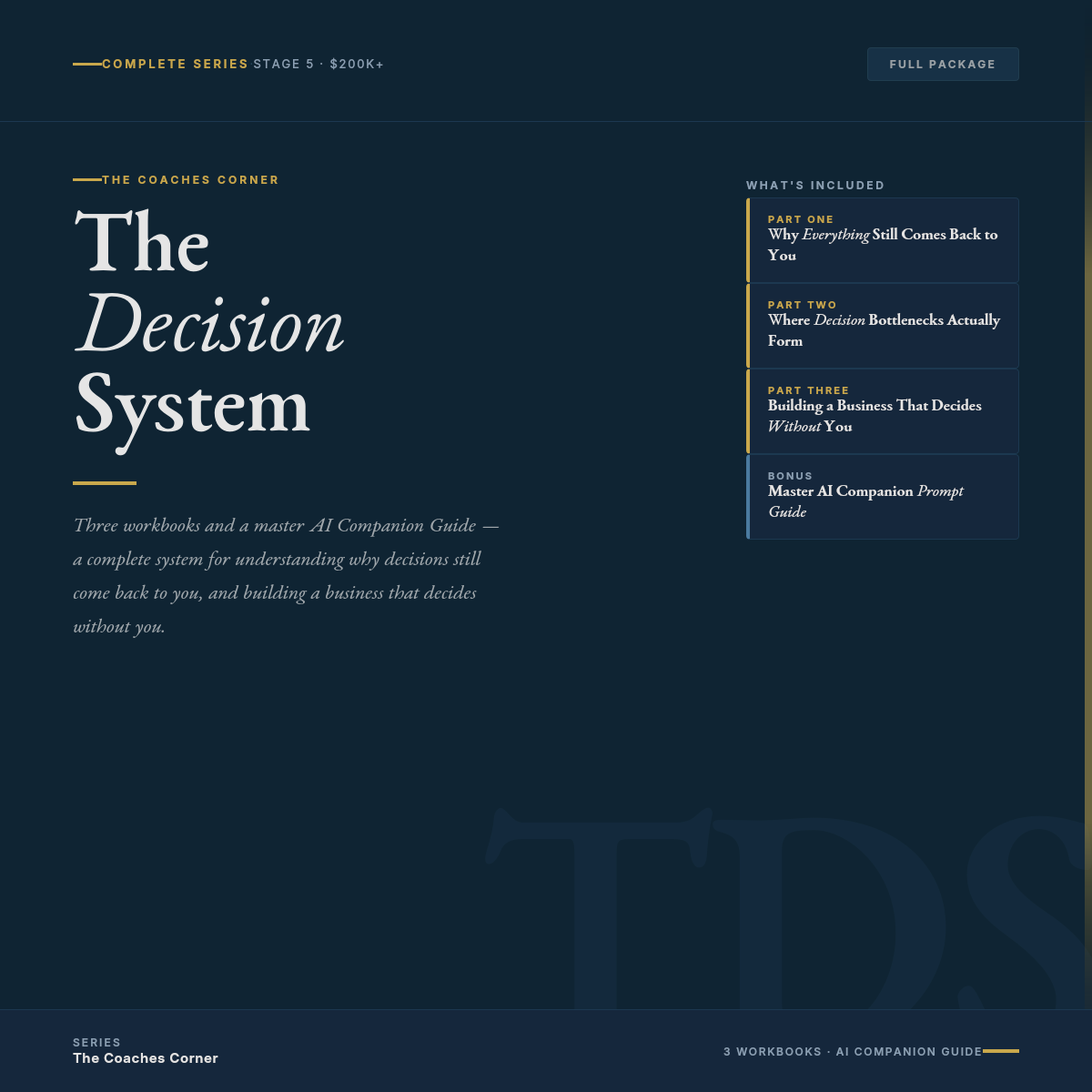
The Decision System works through three layers in sequence: understand where decisions return and why, diagnose why ownership does not hold even when work is clearly assigned, and see clearly what the role becomes as ownership begins to stabilize.
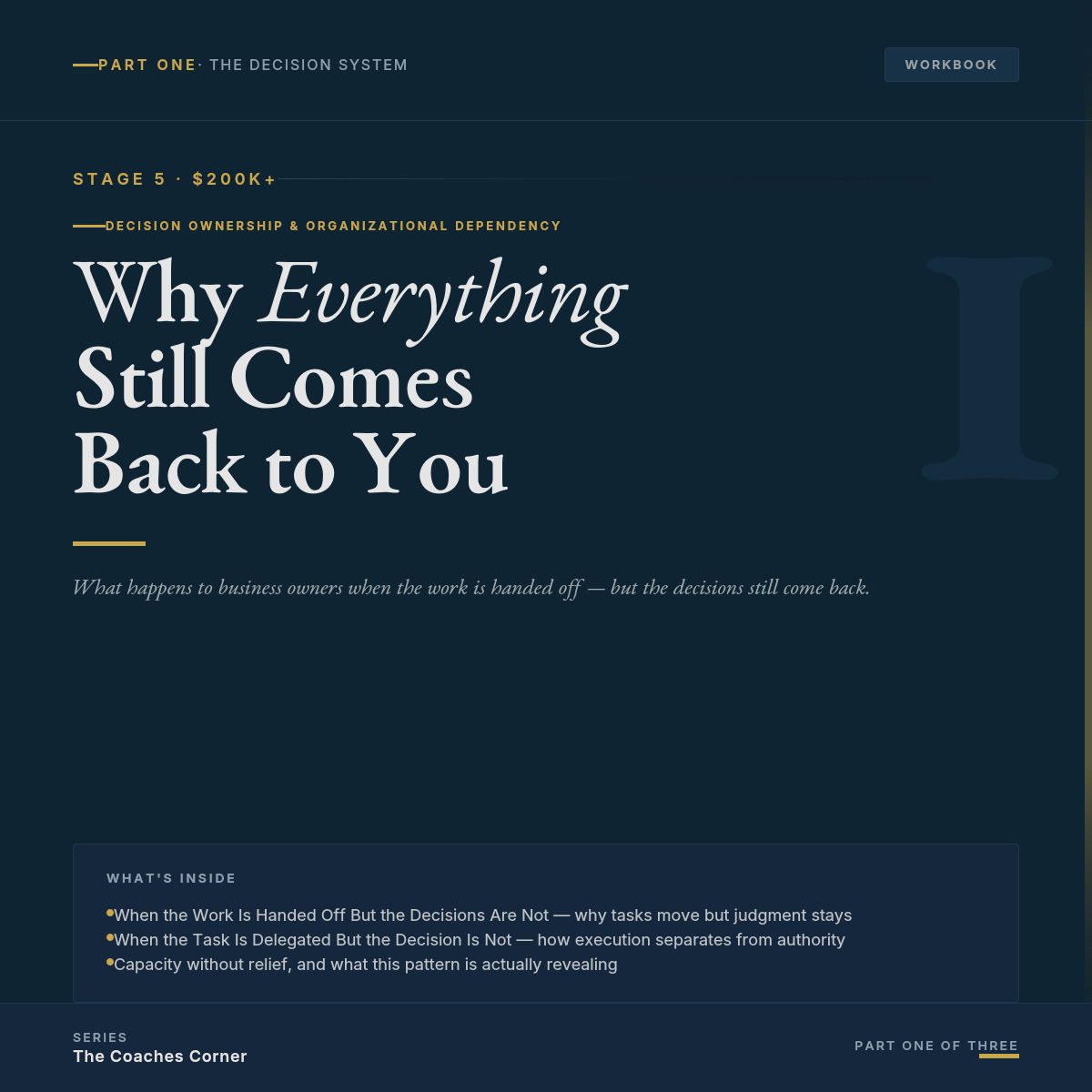
Workbook One — Why Everything Still Comes Back to You When work was done primarily by the owner, decisions were inseparable from execution. The same person did the task and made every judgment call within it. When tasks were later transferred to a team, the visible steps moved — but the thinking that shapes those steps often stayed. This workbook surfaces where that pattern is still operating: which decisions still route to the same place, where every escalation lands when something goes off-plan, and what the difference between handing off a task and transferring decision ownership actually looks like in practice.
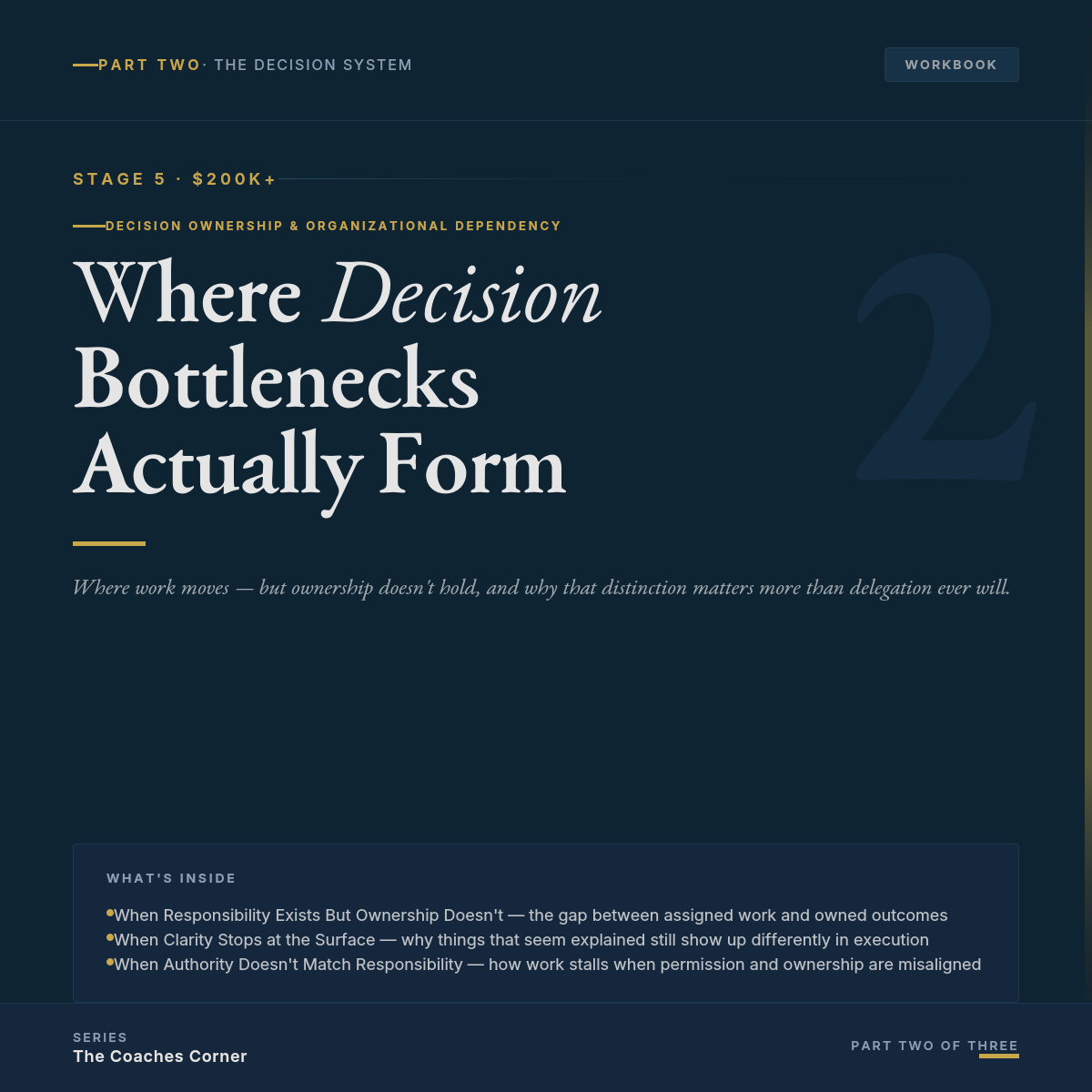
Workbook Two — Where Decision Bottlenecks Actually Form There is a distinction that rarely gets named clearly in most businesses, and it is responsible for more decision bottlenecks than almost anything else: the difference between responsibility and ownership. Responsibility answers what needs to be done. Ownership answers what the result should be — and how to get there when the situation does not go as planned. When the first is clear and the second is not, work moves but does not hold. Workbook Two maps where that gap lives: where clarity stops at the surface, where authority does not match responsibility, and where ownership resets under pressure.
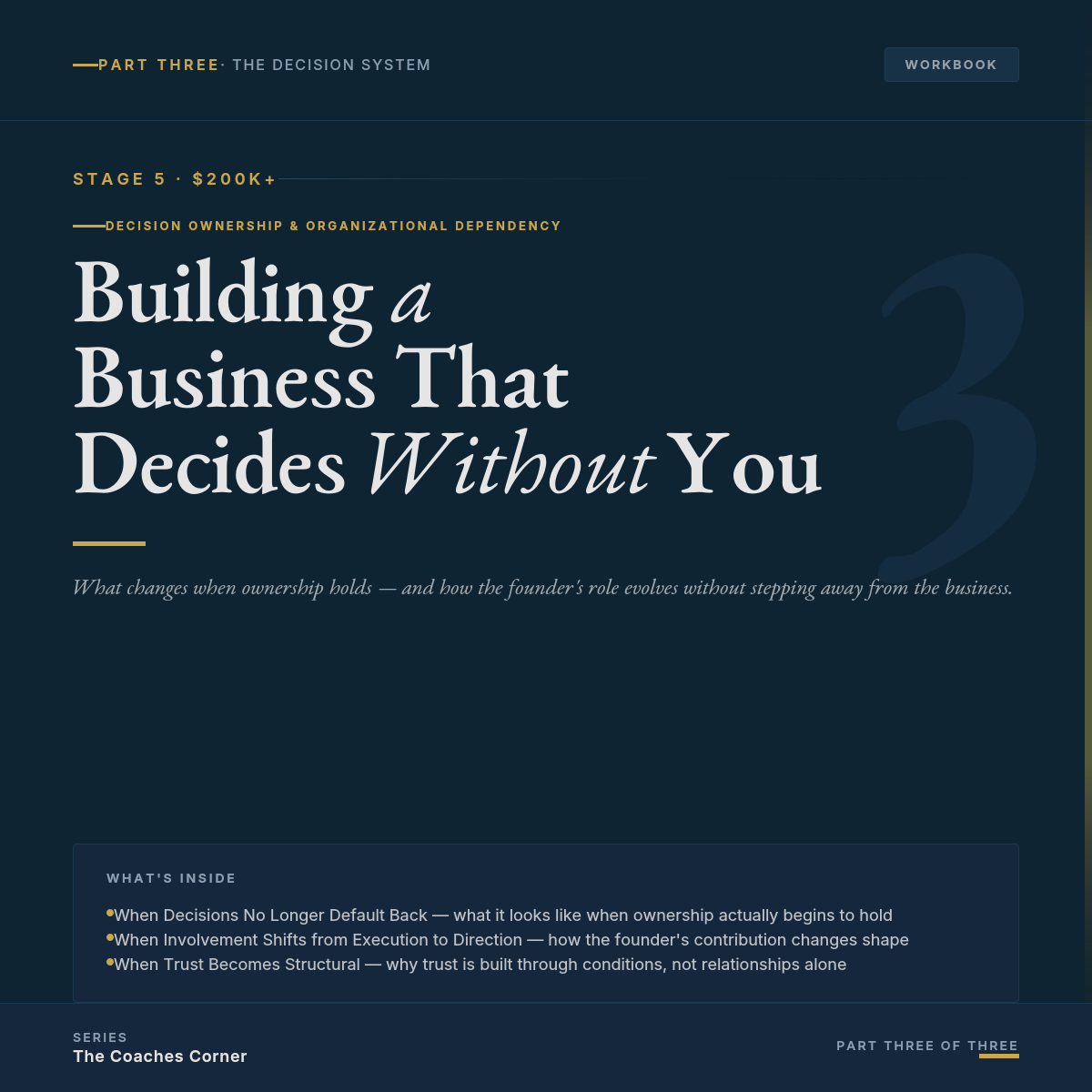
Workbook Three — Building a Business That Decides Without You The goal is not to remove yourself from the business. It is to understand how the role evolves as ownership begins to hold. Most founders are so practiced at recognizing when decisions return that they rarely stop to notice when they do not. The absence of escalation is quiet — it does not announce itself the way an interruption does. Workbook Three maps that shift: what it looks like when decisions stop defaulting back, how the founder’s contribution changes shape from execution to direction, and why trust at this stage is structural rather than relational.
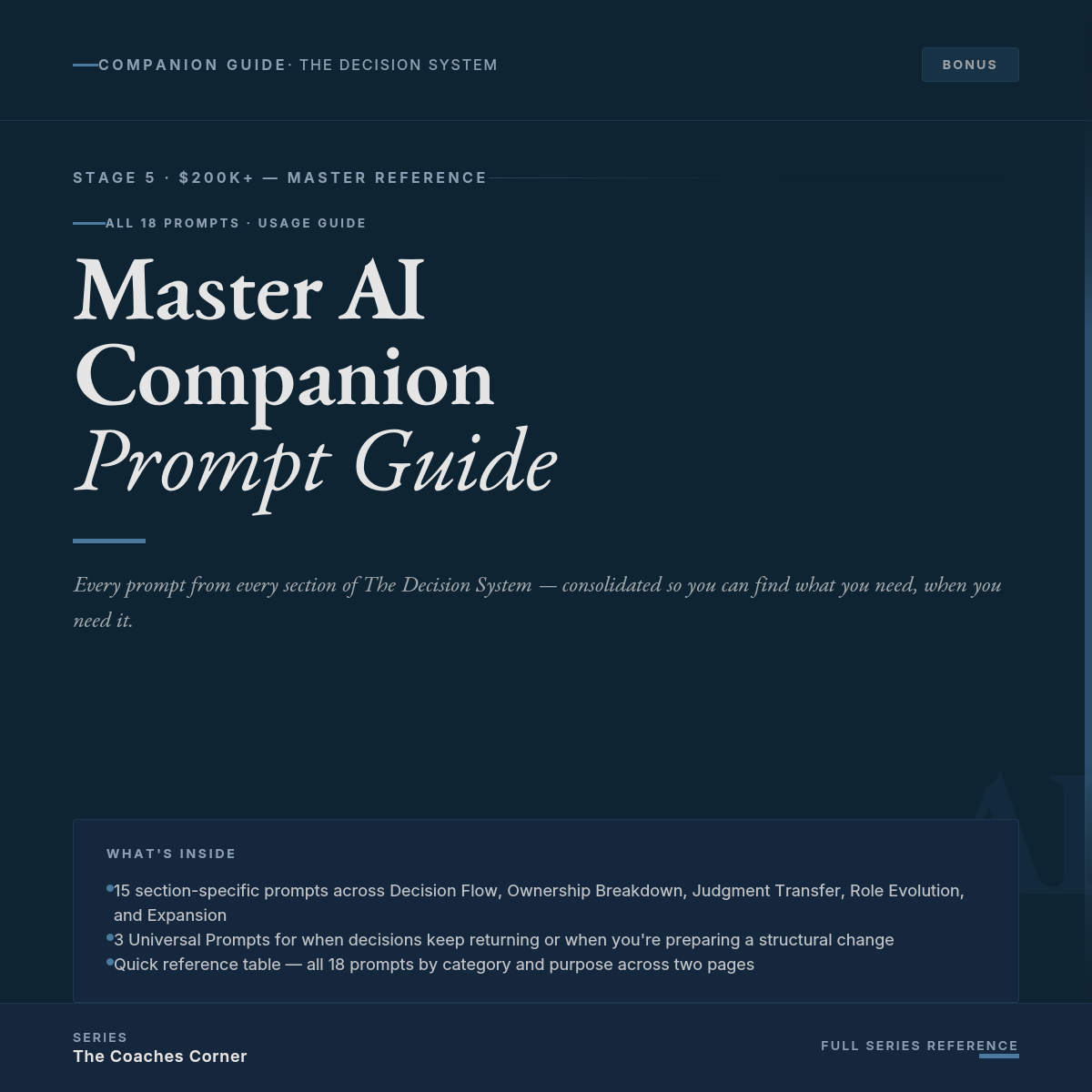
Master AI Companion Prompt Guide All 18 prompts from across the series organized into five thematic categories — Decision Flow, Ownership Breakdown, Judgment Transfer, Role Evolution, and Expansion — plus 3 universal prompts. These prompts are not designed to give you answers. They are designed to help you see what is actually happening in your business more clearly than you can when you are inside it. A prompt session that produces real value should change something in what you have written — not just give you better language for what you already believed.
Reviews
There are no reviews yet.