
Description
The founders who move past Stage 1 are not the ones who moved fastest. They are the ones who saw most clearly.
A first client proves one thing: someone was willing to pay you, once, for something, under a specific set of circumstances. That is meaningful. It is not proof of a repeatable business. The gap between what happened and what you decided it means is where most early-stage businesses get stuck — not because the business is not working, but because the owner is drawing conclusions before the pattern is established.
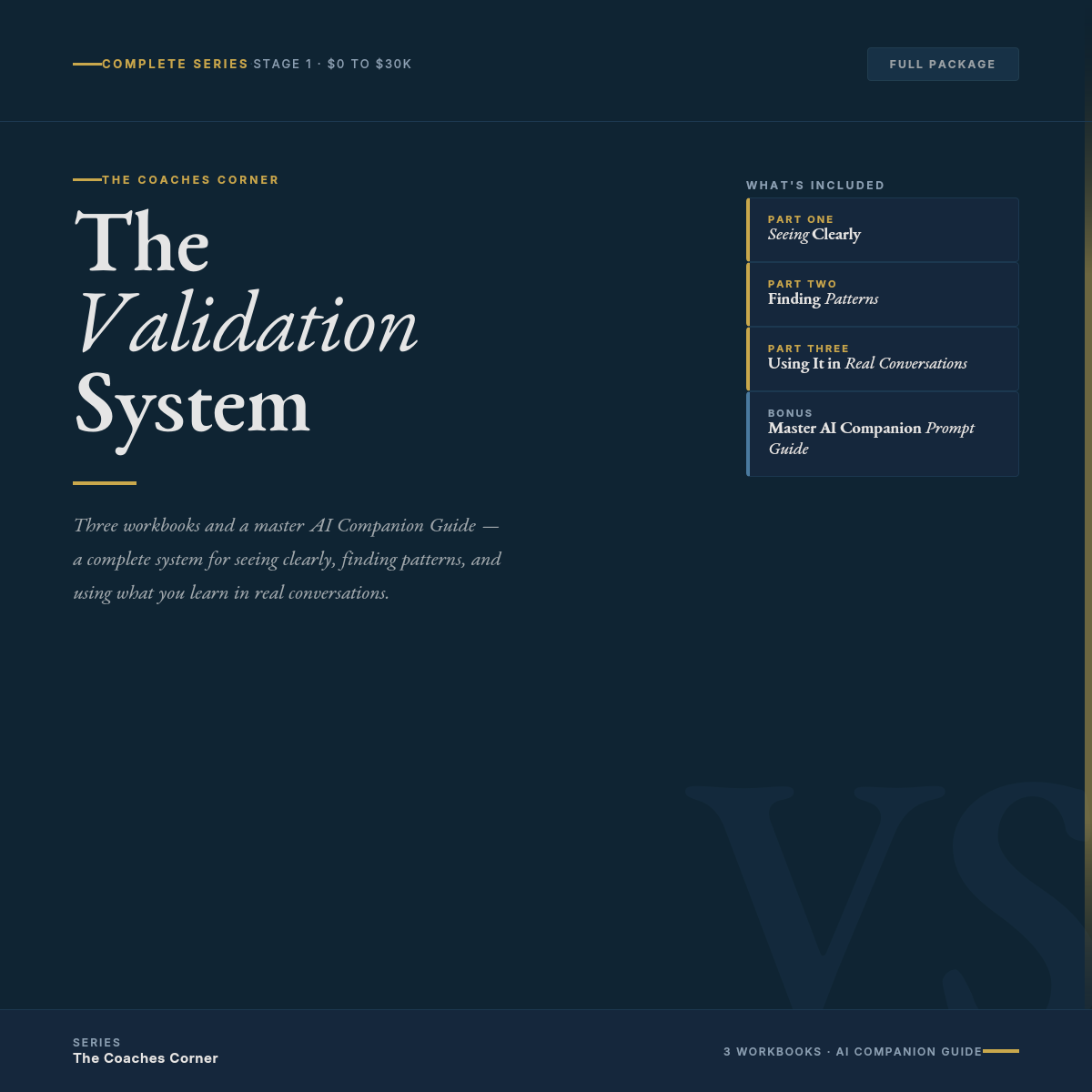
The Validation System is three workbooks built to close that gap. See what the evidence actually says. Find what repeats. Use it in real conversations.
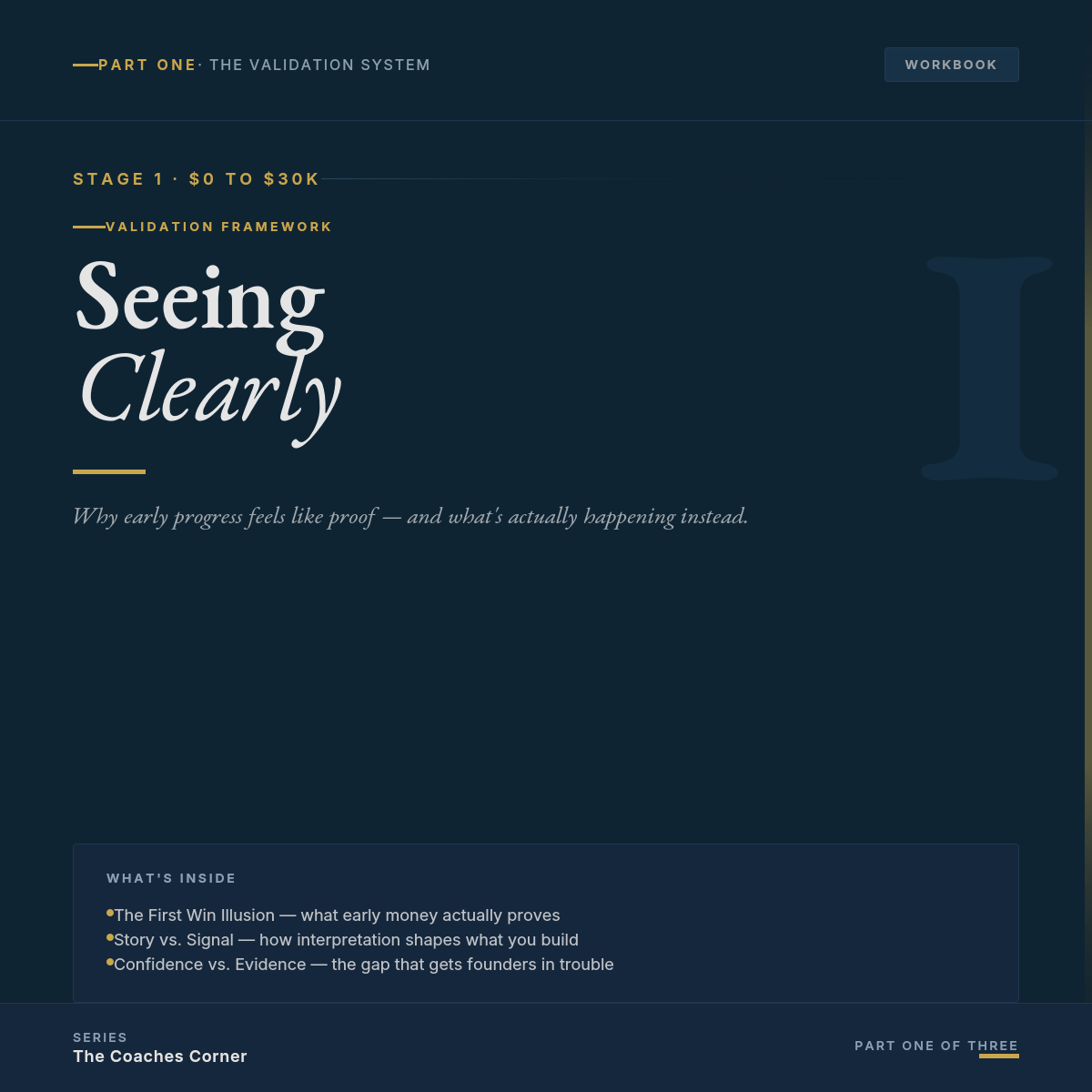
Part One — Seeing Clearly Before you can build something repeatable, you have to be honest about what you actually know versus what you are choosing to believe. Part One turns the lens inward: what early money actually proves, how interpretation shapes what you build, whether early wins are pointing you in a useful direction, and where your confidence is actually standing. The founders who get this right do not move faster — they stop building on assumptions they have not examined.
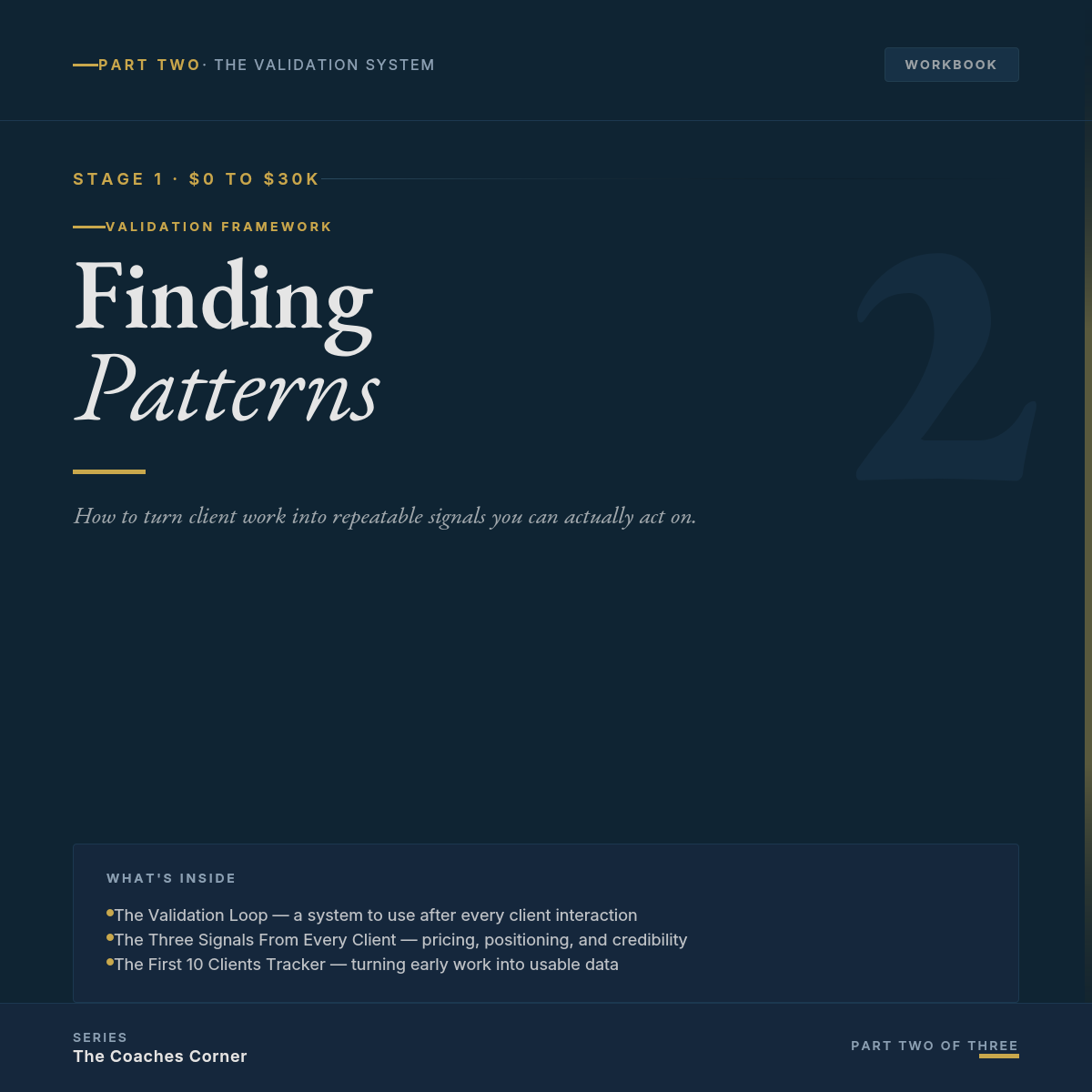
Part Two — Finding Patterns Part One asked you to see more clearly. Part Two gives you the system for finding what repeats. Progress at Stage 1 tends to feel scattered — one client says yes for one reason, another hesitates for a completely different one. Without a way to track what is actually happening across those experiences, every client feels like a separate event. It is not. Part Two installs the structure: the Validation Loop, the Three Signals from Every Client, the First 10 Clients Tracker, and the standard for proof that actually holds up.
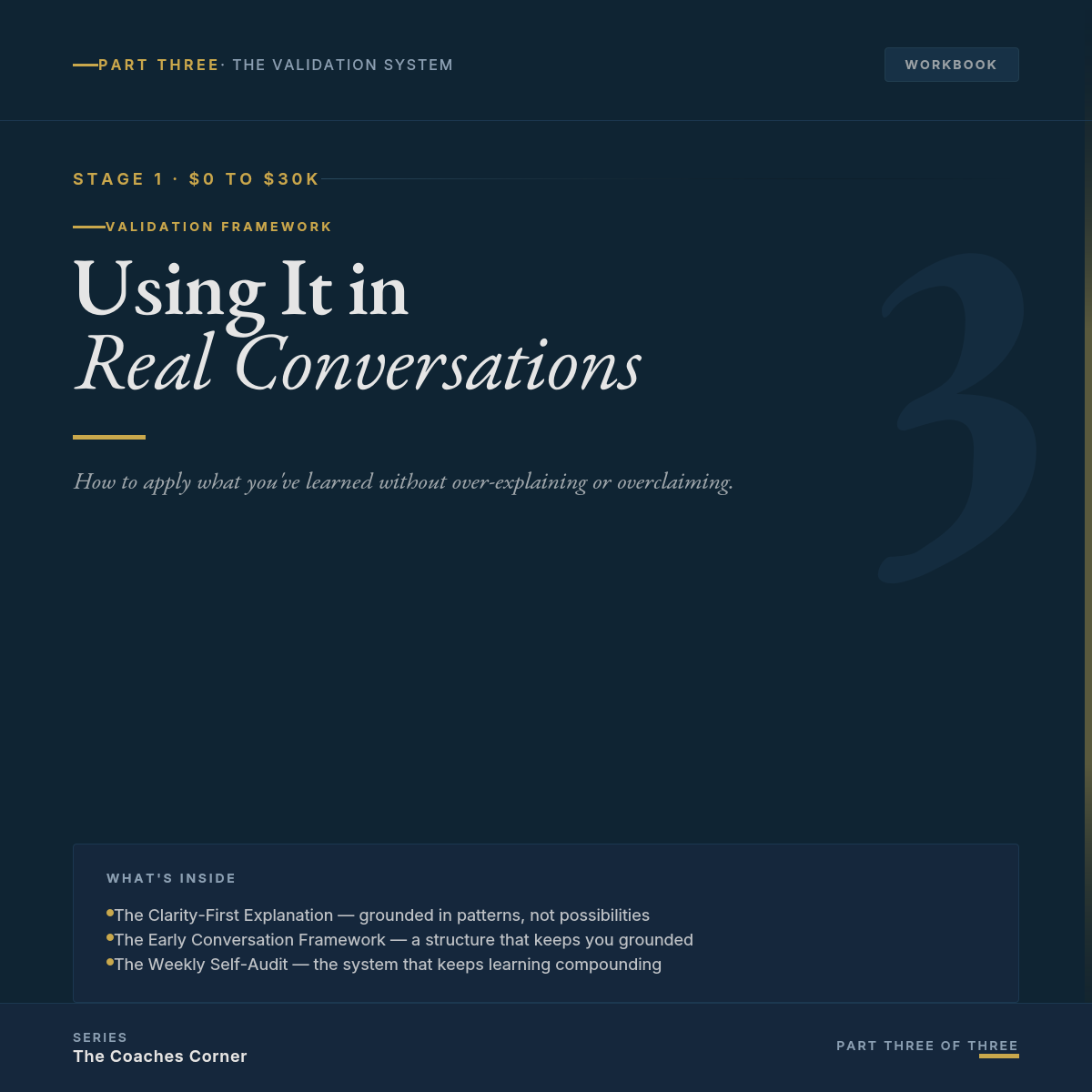
Part Three — Using It in Real Conversations Clarity on paper is static. Clarity in conversation is dynamic — it has to hold up under questions, under silence, under the specific situation of the person across from you. Most founders at this stage understand their work better on paper than in the room. Part Three gives you the frameworks and practice structure to close that gap: how to explain your work from actual patterns rather than possibilities, how to talk about early evidence without overclaiming it, and the weekly self-audit that turns every conversation into compounding data.
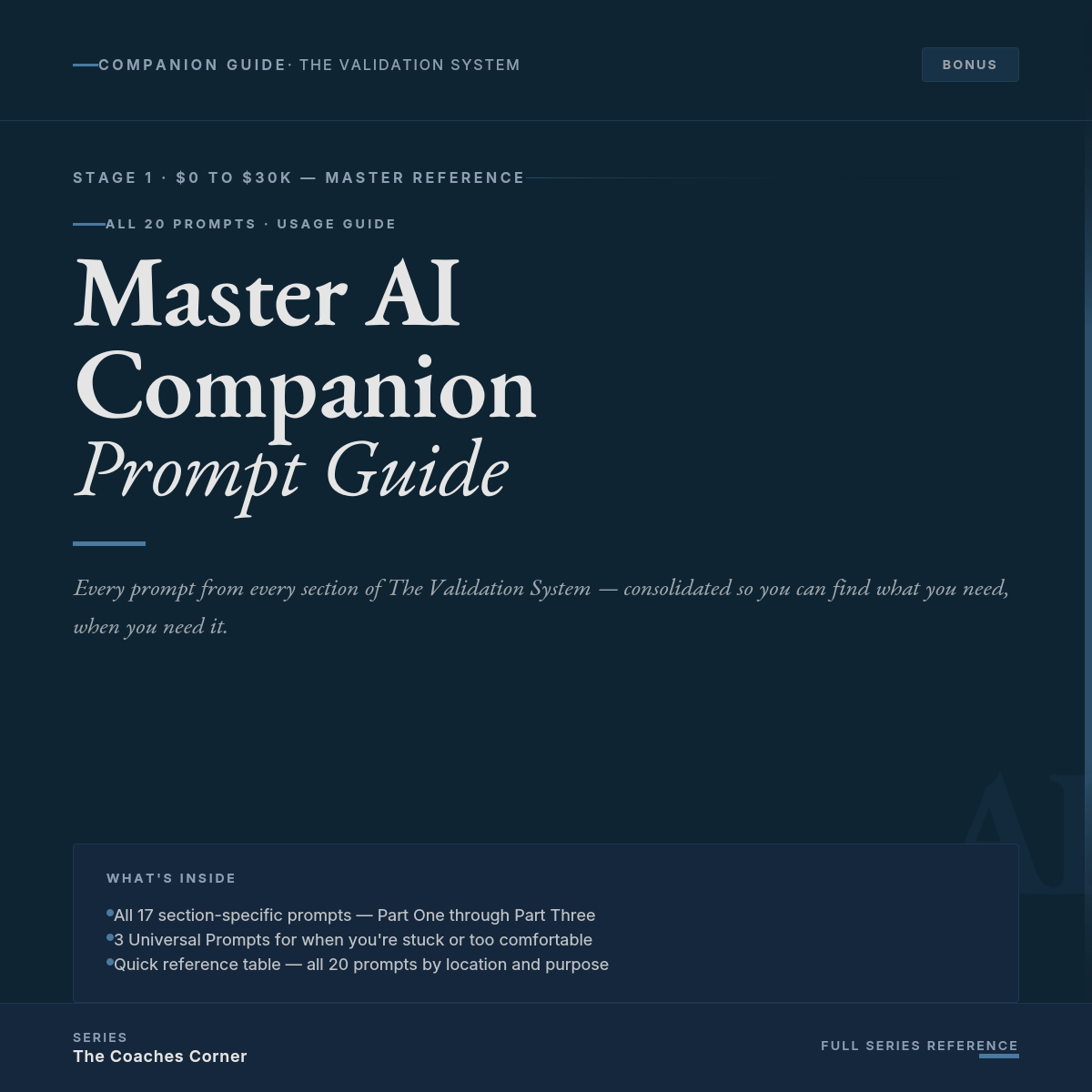
Master AI Companion Prompt Guide All 20 prompts from across the series in a single reference — 17 section-specific prompts in order plus 3 universal prompts for when you are stuck or need to practice a real conversation. Built to push toward honesty, not comfort. These prompts do not expire — return to earlier ones as your situation develops. The Validation Loop prompt works differently with six months of client work behind you than it does when you are just starting.
Reviews
There are no reviews yet.